




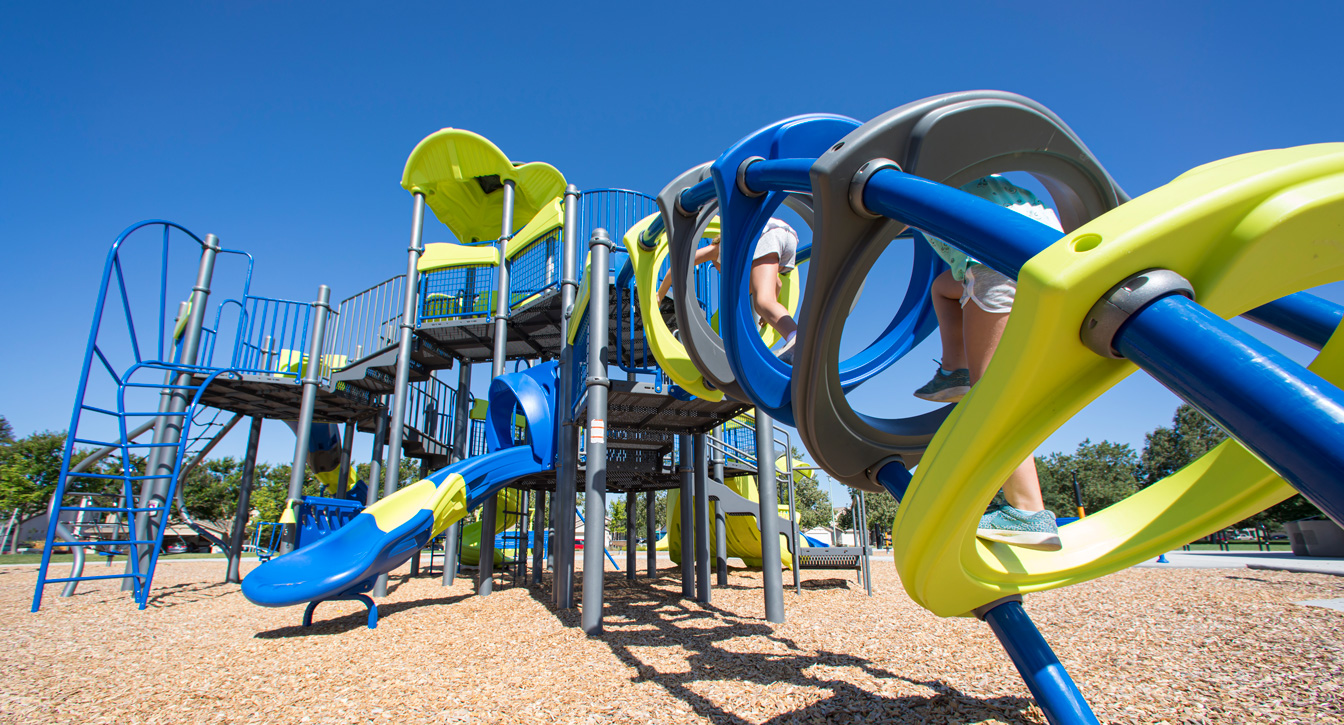


October is Sensory Processing Awareness Month. It’s a time to focus on (and learn about) how children take in and respond to sights, sounds, textures, and movement. Many classrooms and daycare rooms already have a calm down space: a quiet corner where a child can step away and reset. Unfortunately, most playgrounds don’t have such a space, even though recess brings with it a lot of noise.
What Is a Sensory-Friendly Playground?
A sensory-friendly playground gives children ways to engage their senses through touch, sound, sight, and movement. But it also means providing places to step back when that input becomes too much. It works for kids who seek out sensory experiences and for kids who are quickly overwhelmed by them.
Our approach to inclusive playground design like this builds on a few core principles:
- Multi-sensory play
- Varying play intensities
- Greater accessibility
- Orientation paths and quiet spaces where kids can decompress
This balance is more prevalent in indoor spaces. There’s plenty to engage with, plus a quieter area set apart from the main activity. Even places designed for adults have a place for people to take a breather. Organizations like the STAR Institute for Sensory Processing use October to spread awareness of Sensory Processing Disorder. That makes this month a natural time to evaluate your own playground. Does it provide for kids who have sensory sensitivities?
Why the Playground Needs a Calm-Down Space
Schools and daycares often use calming corners indoors to give kids somewhere to go when they feel overwhelmed. Outdoor play turns the dial up, but many playgrounds have nowhere set aside for a child to reset. A child who needs a break may have to leave the play area altogether, making them feel like they aren’t welcome in the space.
An outdoor retreat gives kids a place to step away, regroup, and rejoin play without leaving the playground (or an adult’s line of sight). Like other sensory-friendly spaces, it works best when everyone knows where it is. If one exists, it’s always a great idea to clearly let the kids know it’s there for anyone to use when they need it (even kids without specific sensitivities).
“The goal is a place where a child can step away, regroup, and rejoin play without leaving the playground.”
What Makes an Outdoor Retreat Work
The strongest retreats on a sensory-friendly playground combine several elements:
- Placement: Set the retreat away from swings, spinners, slides, and musical panels (AKA the places that produce the most noise).
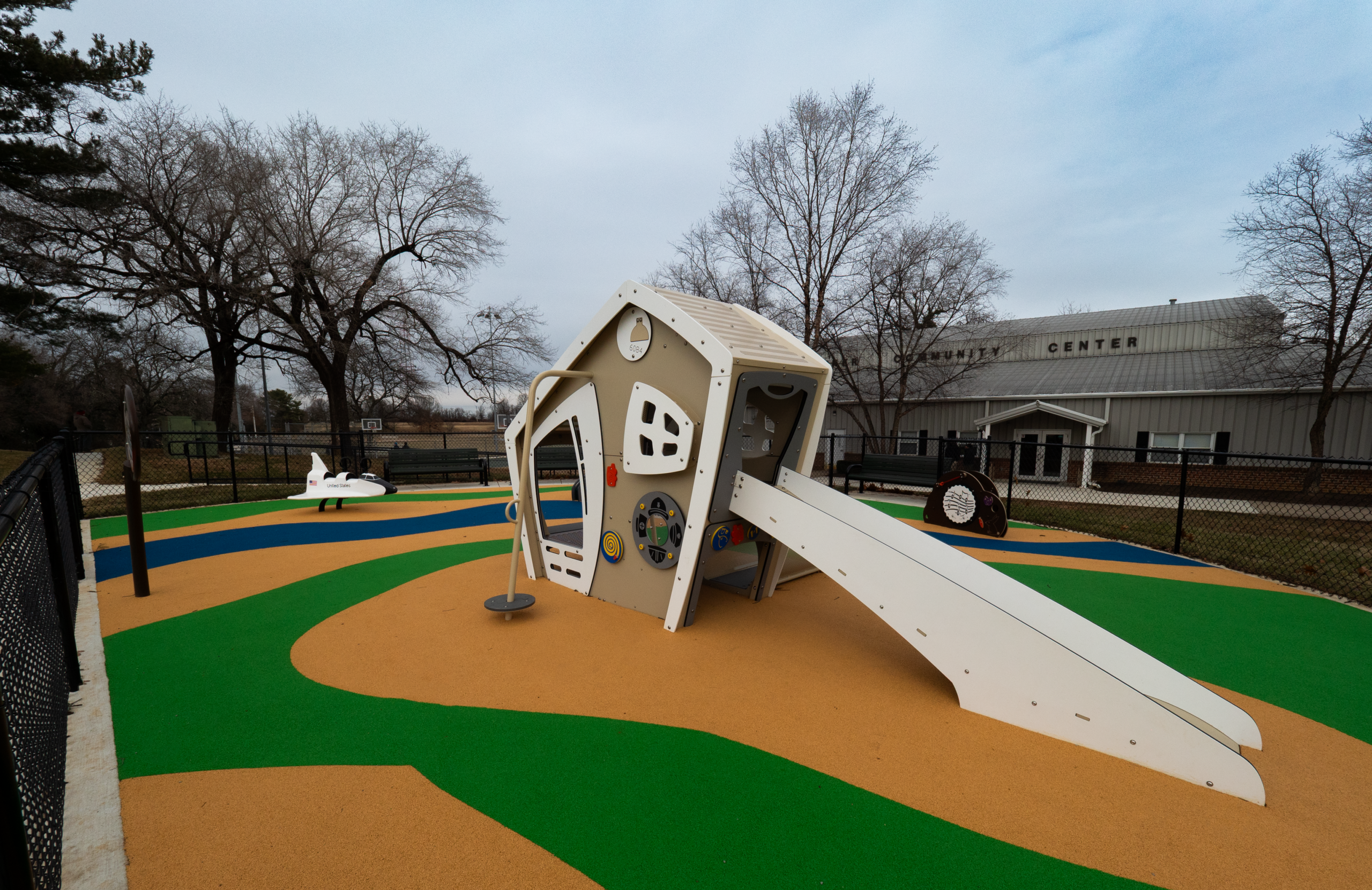
- Partial enclosure: They need to have their space, but you need to be able to see them. Low walls, panels, or playhouse-style structures help the space feel tucked away without eliminating visibility.
- Seating: Provide enough seating for at least two people. A bench is usually enough.
- Low-intensity sensory elements: Tactile and textured surfaces give kids something calm to focus on. Our Texture Play elements fit right in here. So does a Sensory Maze, which pairs light and texture in a setting designed to soothe.
- An accessible route: Every child should be able to reach the retreat, including kids who use wheelchairs or walkers. Incorporate wide routes, smooth transitions, and surfacing that works for mobility devices. (Our post on accessible vs. inclusive playgrounds covers surfacing options in more detail.)
- A predictable path: A clear, consistent route helps kids find the retreat when they need it. Orientation paths and quiet spaces are part of how we design for children on the autism spectrum.
- Visual cues: A distinct structure, sign, or change in surfacing color helps kids recognize the retreat at a glance.
Fitting the Space to Your Site
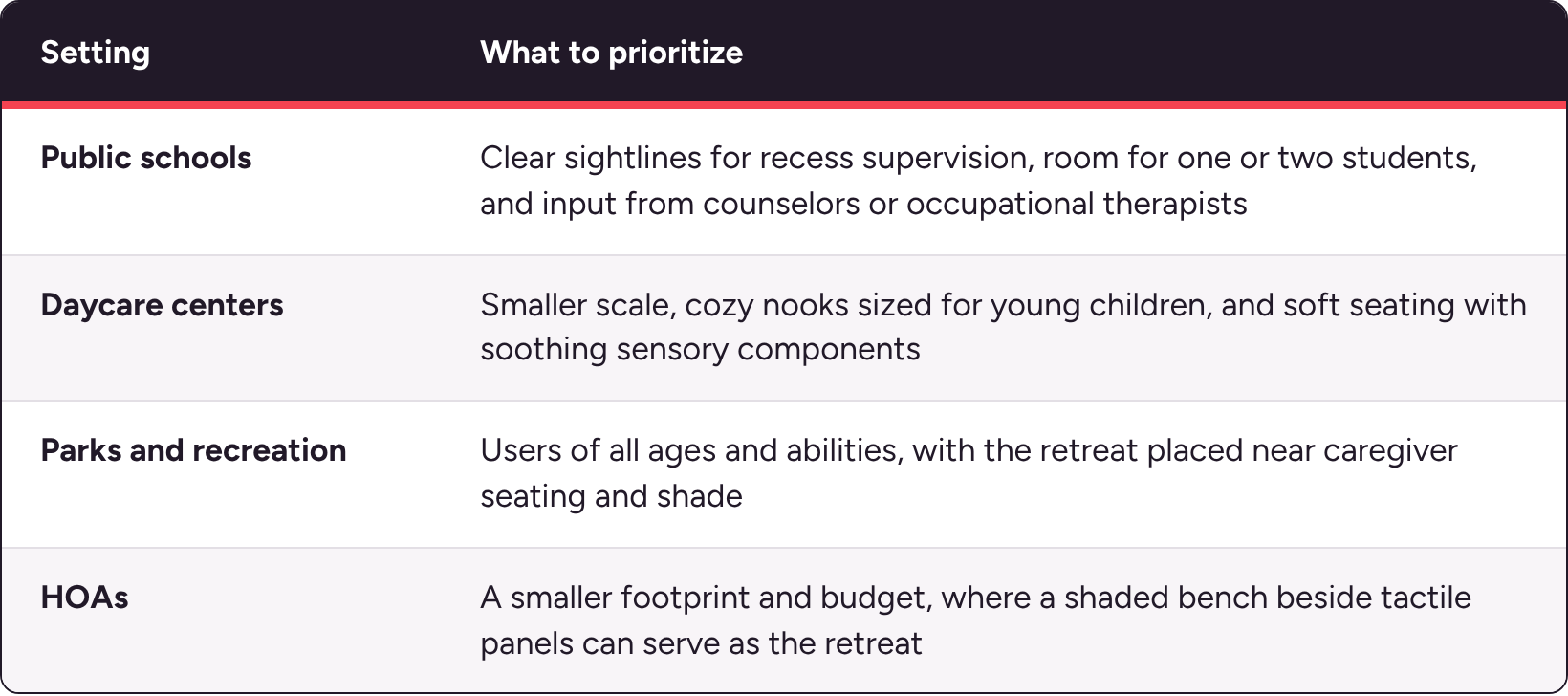
Sensory-friendly spaces look different at a school than, say, a neighborhood park. Here’s where to focus by setting:
Adding a Retreat to An Existing Playground
A retreat doesn’t always require a new playground. Sensory Processing Awareness Month is a good time to walk your current site and see what’s already in place. Use this checklist as you go:
- Where is the quietest corner of the site?
- Is there shade, or room to add it?
- Can every child reach that spot on an accessible route?
- Is there space for seating?
- Can staff and caregivers see into it from the main play area?
- Could any existing panels or features move there?
- Where do kids already go when they need a break?
Our team can visit your site, review the layout, and recommend equipment options that fit your sensory-friendly playground and your budget.
Plan Your Playground Retreat With Metro Recreation
A calm-down space lets every child take a break without removing themselves from play entirely. We encourage you to explore the sensory play equipment that could make your community’s playground truly accessible.
For more information on Sensory Processing Awareness Month, click here.