





Ask most administrators when new playground equipment for schools can go in, and you’ll hear one answer: summer. But summer isn’t the only option, and waiting for it can push a project back a full year. In actuality, the season doesn’t usually slow a school playground project down; the planning runway is the real culprit. Once you know how long each step takes, you can pick the install window that works for your school and plan backward from it. Here’s how it works.
Summer Isn’t the Only Install Window
Most playground installation projects take a few days to a few weeks onsite, which fits nicely into the school calendar. Common windows include:
- Winter or spring break: Two weeks with an empty campus
- Long weekends: Ideal for smaller additions, like new swings or a single structure
- Phased installs: Larger projects split into zones, so part of the playground stays open
- Summer break: Still a great option, but it’s the busiest season for installers, so dates fill up early
Installing while school’s in session? Crews fence off the work zone to keep students safe and schedule the heaviest work around recess, arrival, and dismissal, so the school day runs as usual.
How Long Does It Take to Build a School Playground?
Most projects involving new playground equipment for schools take six to twelve months from first conversation to opening day. (For a general phase-by-phase breakdown, see our guide on how to plan a playground project.)
Schools also have a few extra factors that shape the install-planning calendar:
- Monthly board meetings, where one missed agenda can add weeks
- Fiscal years that often start July 1
- Grant application and award deadlines
- PTA and PTO fundraising cycles
The School Playground Planning Timeline
Months 1 to 2: Assess Needs & Set a Budget
Gather your committee and answer the basics. Which age groups will use the playground? How many students will be playing at once? What does the site look like? What are your accessibility goals? A working budget range helps shape every decision that follows, and an early site visit can flag drainage or spacing issues before you commit to a design.
Months 2 to 5: Line Up Funding
Funding often eats up the longest part of your install runway, so run it alongside design. Common ways to pay for school playground equipment include:
- Playground grants for schools: Federal, state, and foundation grants that can cover part or all of a project
- PTA and PTO fundraising: Events, campaigns, and sponsorships led by parent groups
- District capital budgets: Improvement funds that usually follow the district’s budget cycle
- Community partnerships: Donations from local businesses, civic groups, and booster clubs
Whether you’re applying for playground grants for schools or pitching your PTA, focus on student impact and include a budget backed by a quote.
Months 3 to 6: Design & Request Quotes
The right playground equipment for schools balances play value, safety, supervision, and budget. Plan for age-appropriate structures, inclusive features, safety surfacing, shade, and clear sightlines for staff. A Metro Recreation representative can provide a custom layout, renderings, and a full quote.
Months 5 to 8: Get Approvals & Place the Order
Secure board or district sign-off, complete any procurement requirements, and pull local permits for commercial playground installation if your jurisdiction requires them. Then place your order sooner rather than later; manufacturing and delivery commonly take eight to twelve weeks.
Months 8 to 11: Installation
A professional commercial playground installation covers site prep, assembly, surfacing, shade, and a final safety inspection. With the order in, Metro Recreation can schedule the playground installation for the window you chose.
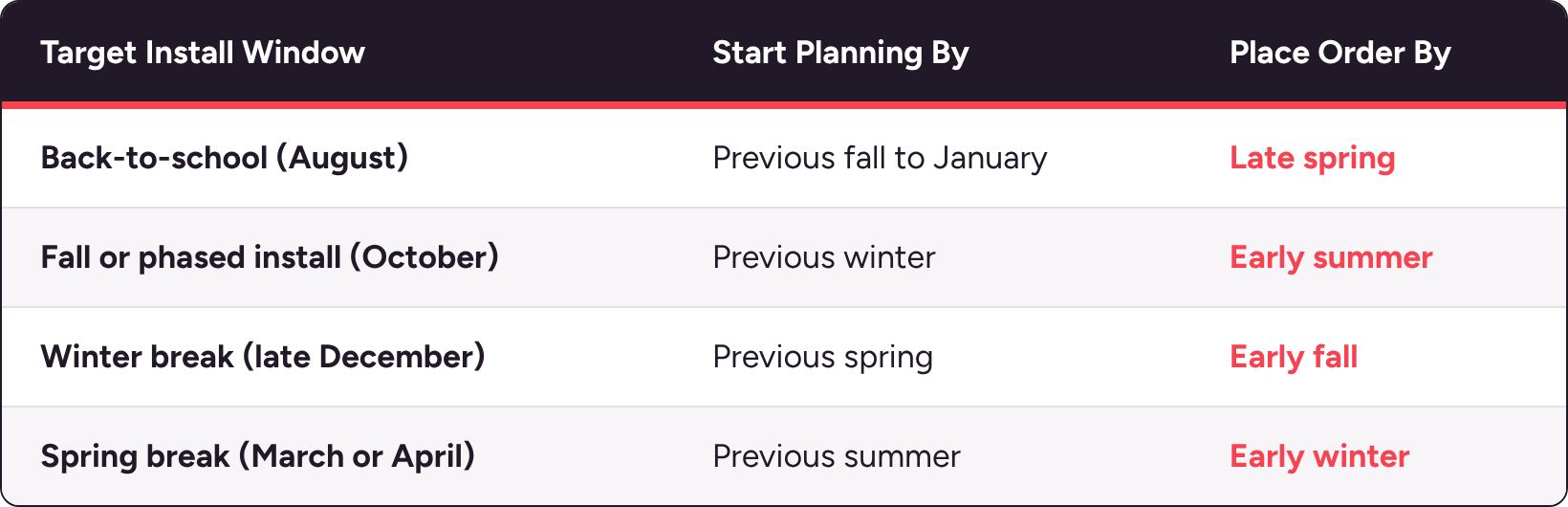
Sample Timelines by Install Window
Here’s roughly when to start planning and place your order for each install window, based on a typical six-to-twelve-month project. Counting on grant funding? Add a few months to the front end, since application and award timelines often run longer than the rest of the process.
What to Budget For
The equipment price is only part of the total. A full budget for school playground equipment must also include:
- Safety surfacing: Engineered wood fiber costs less upfront, while poured-in-place rubber and turf cost more but need less maintenance. The price gap grows with the size of the area (see our guide to sustainable playground surfaces).
- Shade structures: Priced by size and how much of the play area you want covered.
- Site preparation: Slopes, poor drainage, and old equipment that needs to be removed all add prep work before installation can begin.
- Installation, permits, and contingency: Set aside around 10 percent of your budget for unforeseen situations once work begins.
Since every site is different, a site visit by the installer is the fastest way to an accurate figure. It also gives you a detailed quote to use in grant applications and board presentations.
Build In Safety & Compliance Early
Playground equipment for schools has to meet national safety standards, so build them in from the first planning meeting. Key standards include:
- ASTM F1487 and F1292: Safety performance for public playground equipment and surfacing impact attenuation.
- CPSC Public Playground Safety Handbook: Guidance on spacing, use zones, and surfacing.
- 2010 ADA Standards: Requirements for accessible routes and play components
- Fall zones: Protective surfacing must extend around equipment, with depth based on fall height.
And make note, meeting ADA requirements is the baseline, but it doesn’t guarantee every student can play together. An accessible playground makes sure students with disabilities can reach and use the equipment. An inclusive playground goes a step further, with ground-level play, sensory elements, and shared spaces designed so kids of all abilities play side by side. Learn more about the difference between accessible and inclusive playgrounds.
Your School Playground, Your Schedule
New playground equipment for schools doesn’t have to wait for summer. Start six to twelve months out, and you can choose the install window that best fits your school. Metro Recreation is the exclusive Miracle Recreation playground equipment distributor for Maryland, Virginia, West Virginia, and DC. Our CPSI-certified team guides schools through every phase, from the first site visit to final installation. Explore our range of commercial playground equipment, learn about our services, and see the areas we serve.
Ready to start a conversation? Request a quote or schedule a free design consultation today, and let’s find the right install date for your school.