




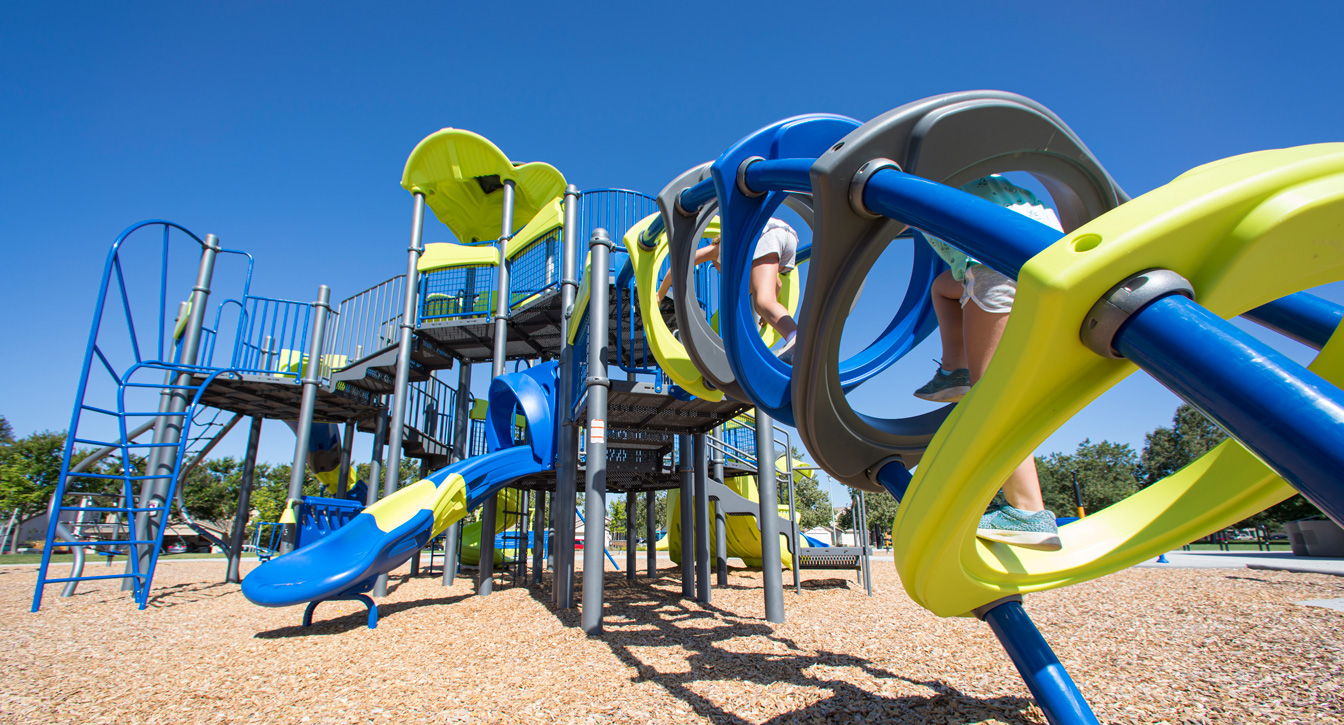


When you think of an unsafe playground, what do you picture? Probably a fall. Maybe a bump on the head. But there’s another common culprit: heat. It’s just as real a hazard, and it’s easy to overlook until someone gets hurt. Metal slides and dark plastic decking can reach temperatures high enough to cause a contact burn in seconds. Keeping kids safe through the hottest months comes down to two things working together: playground shade and the surfacing beneath their feet.
How Hot Can Playground Surfaces Get?
You don’t want a playground adventure to be ruined by burns, so it’s good to know the details. It doesn’t take a heat wave to cause a problem. Direct sunlight on a clear day is enough. Dark-colored equipment, metal components, and certain surfacing materials absorb heat quickly and can climb well above the surrounding air temperature within minutes of full sun exposure. A metal slide sitting at ninety degrees in the shade can feel closer to a hundred and forty in direct sun by early afternoon. Ouch!
Loose-fill mulch tends to stay cooler than rubber or synthetic turf, but any surface can heat up fast when there’s no playground shade breaking up the sun’s path. Once a slide or ladder rung crosses into that range, it only takes a few seconds of skin contact for a burn to happen.
The Risks of Summer Heat on the Playground
It’s not just about surfaces causing burns. Heat-related playground safety concerns tend to fall into a few categories:
- Contact burns from hot metal slides, rails, and surfacing that’s been baking in direct sun for hours
- Heat exhaustion and dehydration from active play during the hottest parts of the day, especially among younger kids who don’t always recognize the warning signs in themselves
- Reduced use, since a playground nobody wants to touch by hand or by foot is a playground nobody uses, no matter how well it was designed
None of this means summer play should be avoided or restricted. You just need to take them into account and plan accordingly.
How Shade Protects Kids (and Extends Playtime)
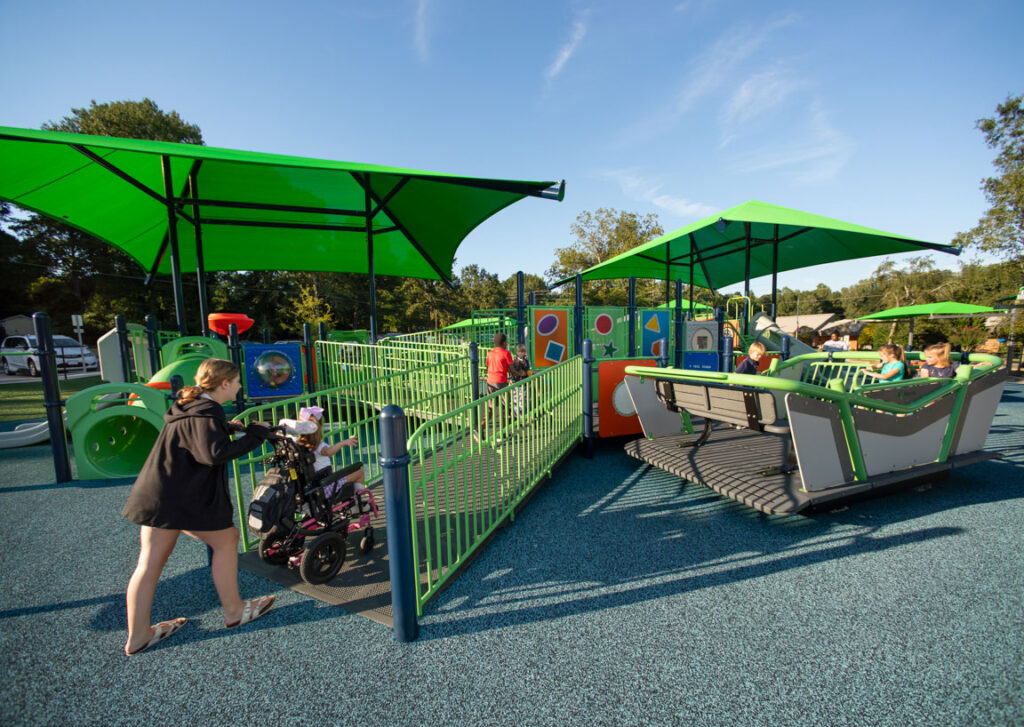
Well-placed playground shade structures do more than give kids and supervising adults a place to cool off. They lower surface temperatures on nearby equipment, cut down on direct UV exposure for everyone onsite, and keep a playground usable straight through the middle of the day, the hottest stretch there is.
“Shade should be treated as a necessity, not a luxury. It’s just as important as surfacing and secure anchoring.”
Properly sized playground shade structures also protect the equipment itself, slowing the fading and material breakdown that comes from years of unfiltered sun exposure. Who doesn’t want a longer service life for the same equipment budget? Options range from single-post pyramid canopies to full hip and cantilever designs, so there’s a fit for compact community playgrounds and full-scale school sites alike. Take a look at our shade structure options to see what would work best for your site and your budget.
Surfacing Choices That Stay Cooler
The surfacing under a playground affects both safety and surface temperature. We recommend placing the same importance on this that you place on fall protection. Poured-in-place rubber, rubber mulch, engineered wood fiber, and synthetic turf each hold heat differently, and color plays a factor. Darker surfacing absorbs more heat and stays hot longer into the evening, while lighter-colored, looser materials tend to release heat faster once direct sun moves off the site.
If you’re still weighing your options, our guide to sustainable playground surfaces breaks the choices down in more detail, including maintenance and accessibility trade-offs for each material.
Don’t forget the turf! Through our partnership with ForeverLawn, we offer synthetic turf built to handle direct sun without the fading, matting, or excess heat retention that lower-grade products struggle with. Pairing the right surfacing with playground shade over the busiest part of the site is one of the simplest ways to keep temperatures manageable without a full equipment overhaul.
Simple Summer Safety Habits for Staff and Parents
Shade and surfacing do a lot of the heavy lifting, but a few daily habits can round out your efforts:
- Test surfaces and equipment by hand before play starts, especially after a stretch of direct sun with no cloud cover.
- Schedule active play for the morning or evening, when temperatures are noticeably lower.
- Keep water nearby and encourage regular breaks, even when kids don’t ask for one.
- Watch for signs of overheating, including flushed skin, unusual fatigue, or complaints of dizziness.
These habits reinforce everyday playground safety without adding much to anyone’s routine. For more on preventing common playground mishaps year-round, take a look at our post on avoiding playground injuries.
Keep Your Playground Cool and Safe All Season
A little planning goes a long way toward keeping a playground comfortable. Shade and the right surfacing aren’t competing priorities. They’re two halves of the same solution, and playground safety is stronger for it when both are working together on the same site.
If you manage a playground for a school, park, HOA, or daycare center, we’d love to talk through playground shade and surfacing options with you. Take advantage of a free consultation that will help you figure out what your site needs before the next heat wave hits.
Request a quote and let’s keep your playground cool, safe, and full of kids all summer long.